Will it fit?
Know before you buy, move, deliver, or install.
Check furniture, appliances, rooms, vehicles, doors, stairs, elevators and more
Will a window air conditioner 48 × 41 × 33 cm fit through a 91 cm door?
See the diagram on the right — the 48 cm item centered in the 91 cm opening, with the 43 cm gap marked at the tightest point.
Run it before the purchase, the move, the delivery, the install.
Everything ItemFits checks, in one minute.
A real question gets its answer. Then the calculators for every kind of space, the math behind a verdict, and the guides and research we publish.
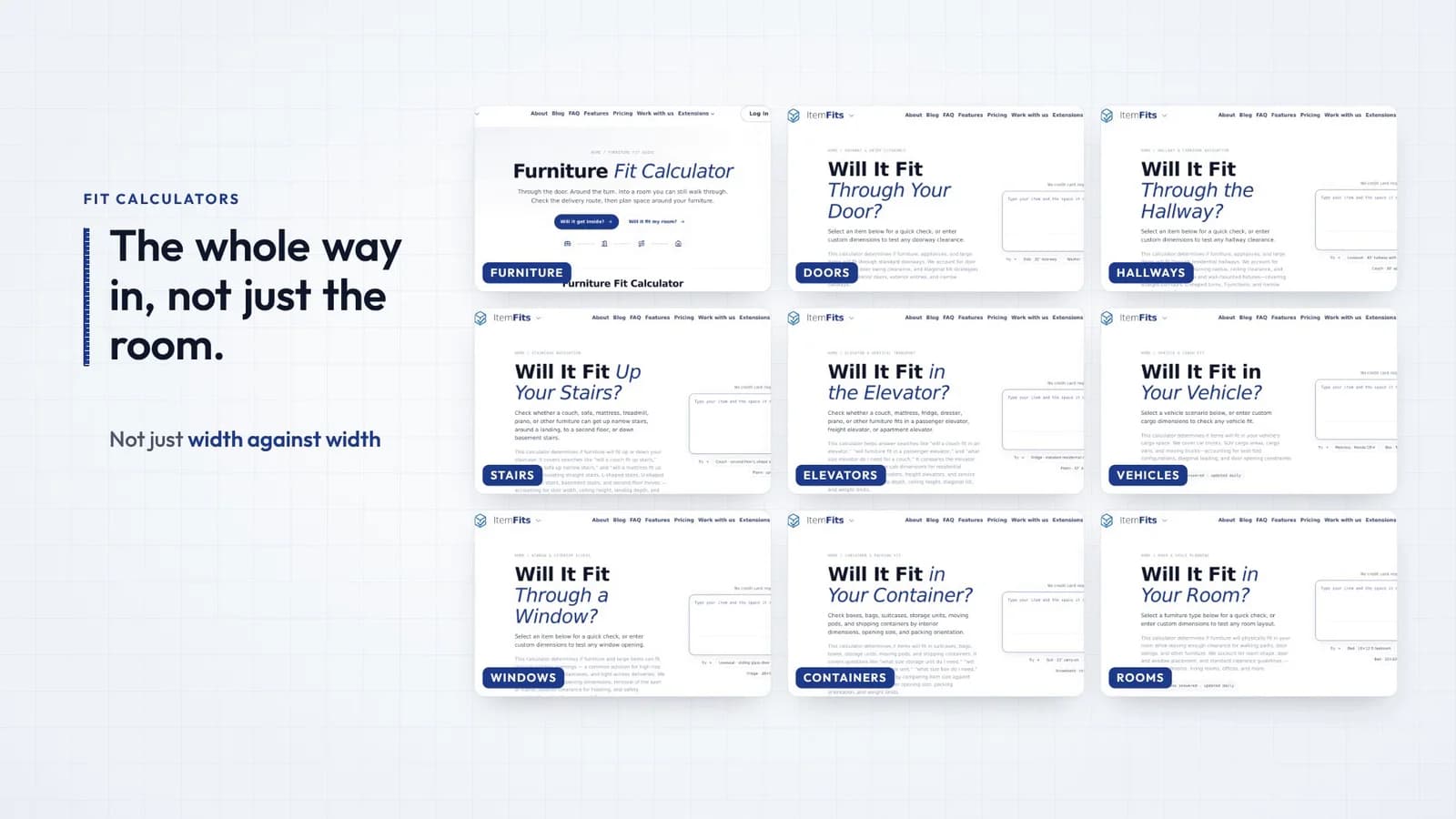
- A real fit checkA question in plain words, a clear answer
- Every kind of spaceDoors, stairs, elevators, vehicles, rooms
- How an answer is reachedTightest point, math, assumptions
- Guides and formulasStandard sizes and real fit checks
- ResearchQuarterly reports and methodology
- For furniture retailersThe same check on product pages
- Linked from car coverageThe Suburban fit check
Not just a yes or no.
A complete fit workflow
ItemFits is your spatial check for everything between a measurement and a decision you can act on.
- playing
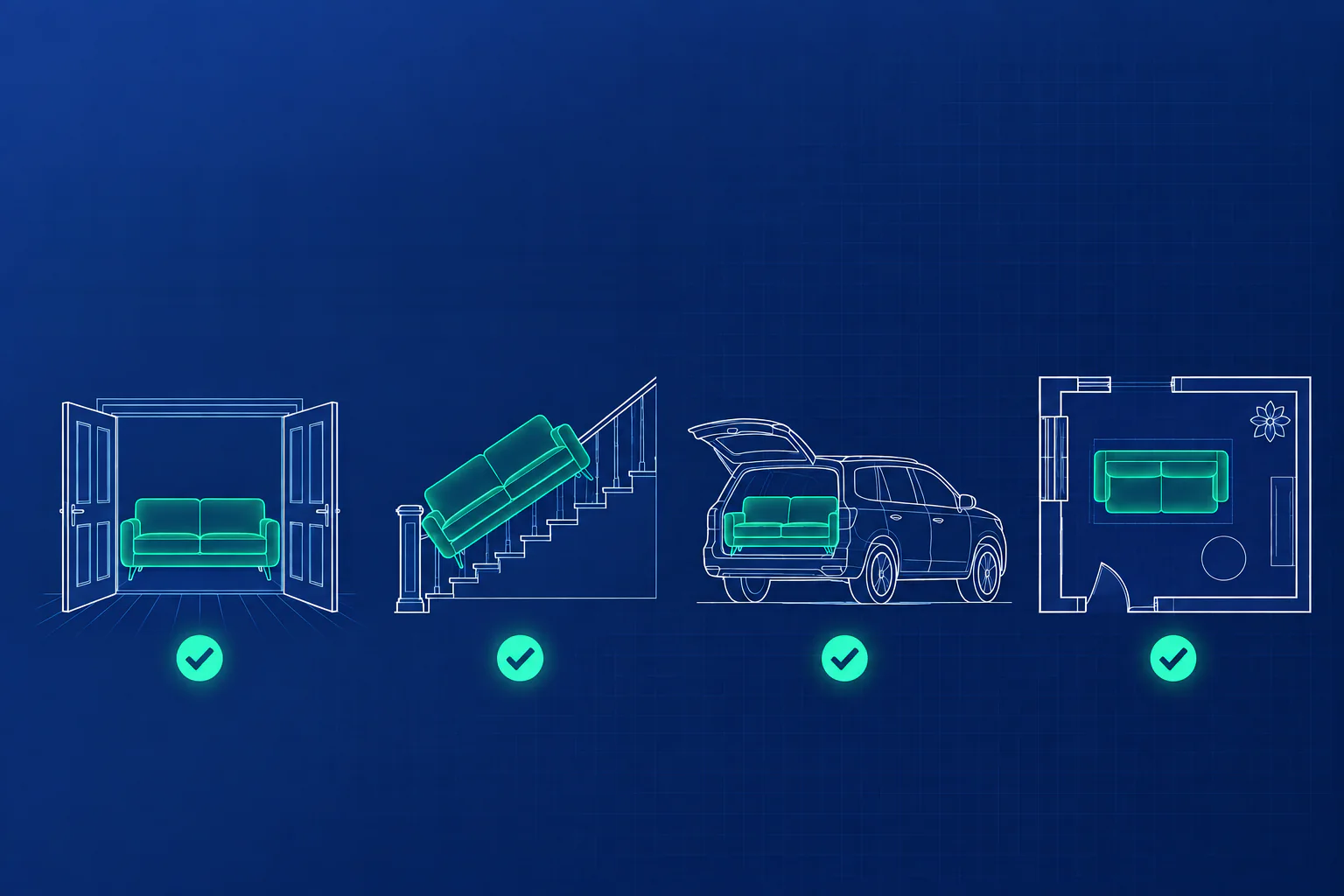

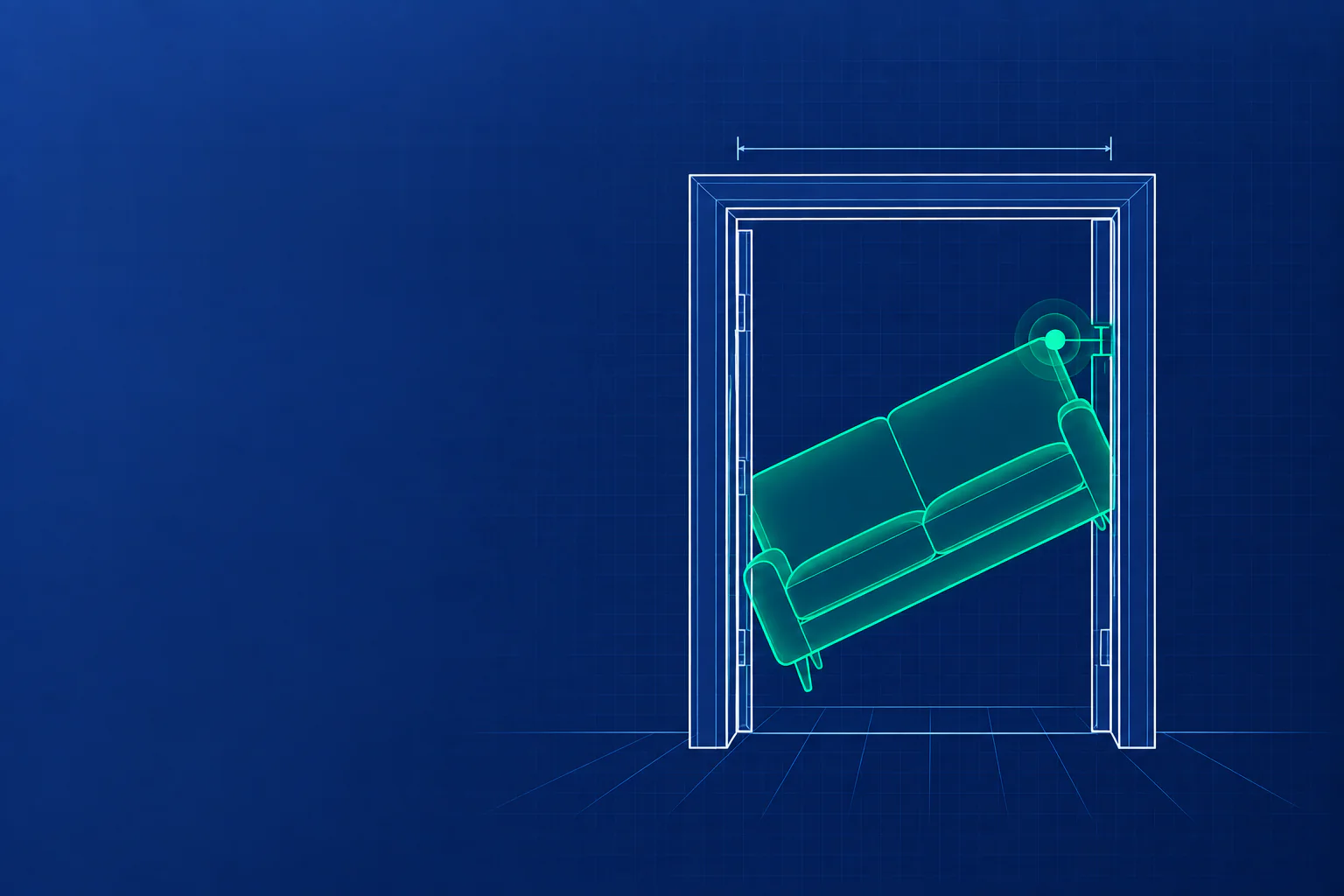
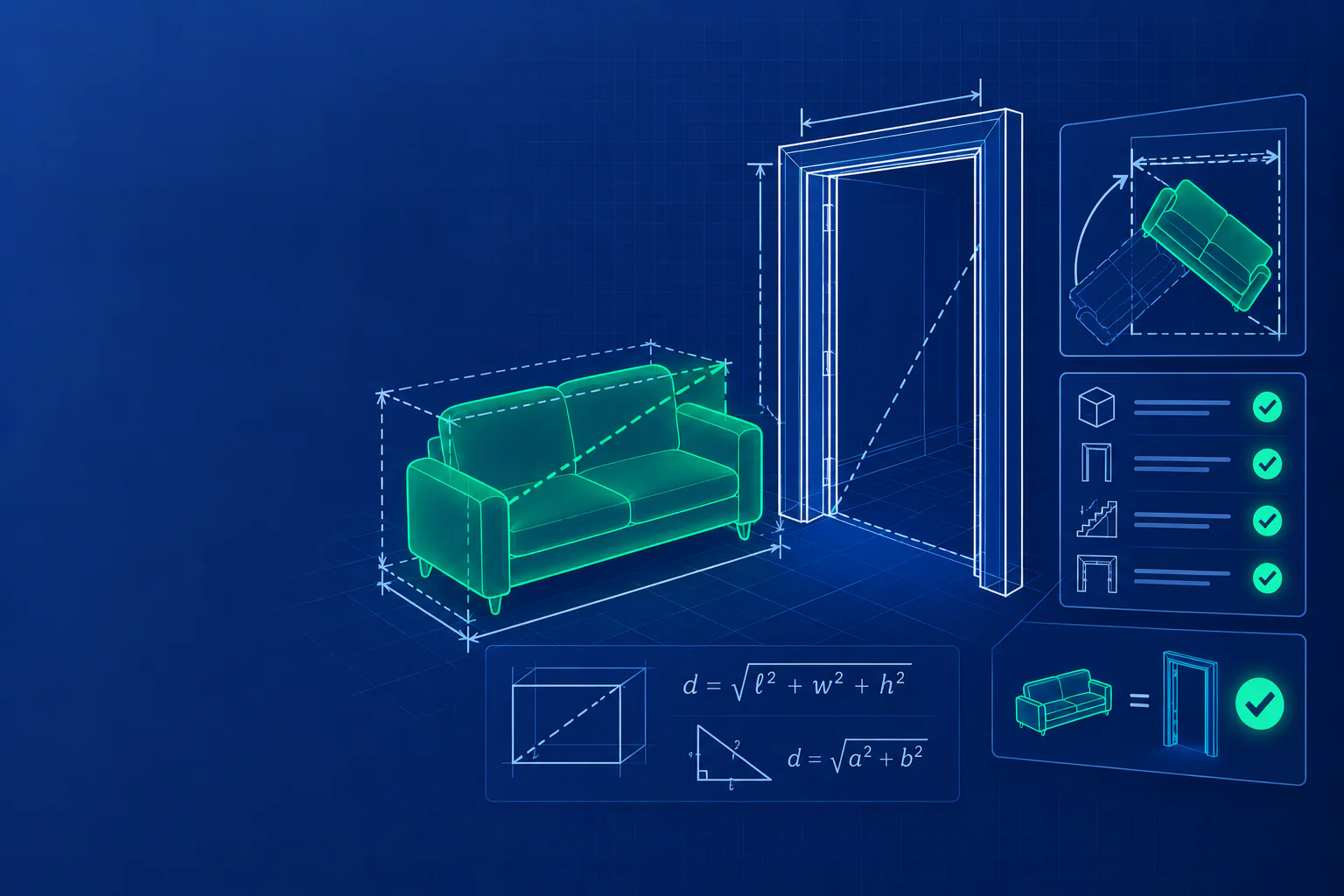
Will it fit through the door?
Check clearance, tilt, and real-world tolerances, including the diagonal you only notice when the box is already stuck.
- Diagonal clearance, not just width
- Tilt and rotation along the path
- Tolerances applied to borderline calls
Will it make the turn upstairs?
Analyze stair width, landings, turns, and height clearance, so a tight switchback does not become a surprise.
- Landing and turn-radius geometry
- Headroom and ceiling clearance
- Step run and width checked together
Will it fit in my SUV, truck, or van?
Compare the item against real cargo dimensions, with seats up or down, before you drive to the store.
- Cargo dimensions by vehicle
- Seats-up and seats-down volumes
- Loading angle through the hatch
Will it fit in the room?
Check floor space, clearance, walkways, and placement, so the piece works once it is finally inside.
- Footprint against floor space
- Walkway and door-swing clearance
- Placement against windows and walls
Will it fit down the hallway?
Measure the corridor against the item's widest point, including the depth of a sofa or the swing of a long box, before it ever leaves the truck.
- Corridor width vs the item's widest point
- Clearance kept along the whole run
- Tight pinch points flagged before the move
Will it make the corner?
Pivot a long item around an L-turn the way you actually would, checked against the real turning radius, not just the straight-line width.
- Pivot geometry around the inner corner
- Turning radius for long items
- The tightest swing point called out
Will it fit in the elevator?
Check the car door, the interior height, and the diagonal you can tilt into, so a tall appliance does not strand you in the lobby.
- Door opening against the item footprint
- Interior height and headroom
- Diagonal tilt when the ceiling is tight
Will it all fit in the container?
Pack multiple boxes into a storage unit, truck, or bin and prove the arrangement actually closes, not just that the volume adds up.
- Real 3D packing, not just volume math
- Every box placed and proven
- Leftover space shown at a glance
See the fit, not just the answer.
Get visual proof and step-by-step calculations. Watch the item clear the constraint and see exactly how the margin was reached.
- Rotatable 3D view of the fit
- Every number in the calculation
- The tightest point called out
Where things usually go wrong
Each row is a real failed-fit scenario — here is what each option actually does about it.
*3D schematics ship with most fit checks. A few edge-case configurations are answered by the math verdict alone.
Every kind of fit question, answered
“Will it fit?” is only the start. ItemFits covers the whole family of spatial questions — pick the one that matches what you actually need to know.
Real people. Real fits.
Short clips from the people who checked before they bought, moved, or installed. One more is on the way.
Got a clip? Yours could be next.
Simple pricing. No subscriptions.
Pay once for the project in front of you, or once for every check you will ever run. One project is rarely one question — you will test the what-ifs.
Everything you need to confidently complete one move, delivery, or purchase.
- Up to 15 fit checks
- Visual proofs for up to 5 fit checks
- Email support
Avoid expensive sizing mistakes before you buy, move, or schedule delivery.
Unlimited planning for every move, purchase, and project—today and in the future.
- Unlimited fit checks
- Unlimited visual proofs
- Developer support within 24 hours
Keep ItemFits available whenever your next project begins—no limits, no surprises.
Frequently asked questions
Everything worth knowing before your first check.
The basics
ItemFits helps you find out whether things fit before you buy, move, deliver, or install them.
Check furniture, appliances, vehicles, storage units, rooms, elevators, stairs, doorways, and more — and get a clear answer, visual proof, and the calculations behind it.
Avoid a bad fit before it happens.
One measurement now beats a couch wedged in the stairwell later. Your first 2 fit checks are free.